

Can barefoot shoes change the shape of your feet?
What if your feet changed simply because you finally gave them room to move? After months or years of wearing barefoot shoes, some people notice that their toes have more room, their feet feel stronger or a small gap appears between the big toe and the second toe. Why might that happen?
1. Why might a gap appear between the big toe and second toe?
Many conventional shoes have a narrow toe box that squeezes the toes together. This can push the big toe towards the others.
Wide toe-box barefoot shoes give your toes more space to spread naturally. Over time, some people notice a more visible gap between the big toe and second toe.
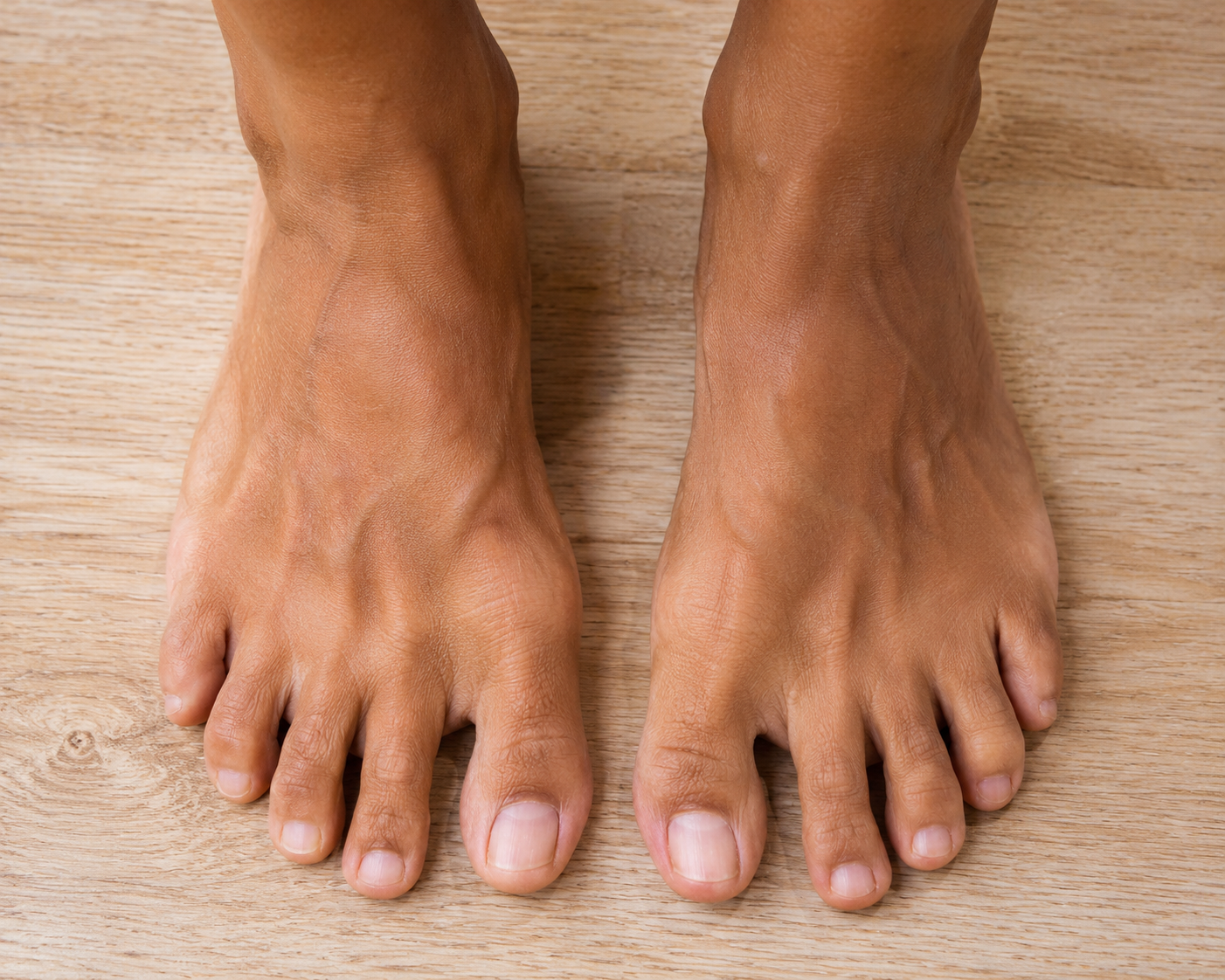
This does not happen to everyone. Foot shape also depends on anatomy, genetics and footwear habits. There is no ideal distance to achieve between your toes.
2. Stronger foot muscles
Minimalist shoes usually have thin, flexible soles that allow the feet to work differently.
A scientific study published in 2021 reported an average 57.4% increase in toe flexor strength after six months of daily use of minimalist footwear.
These findings suggest that regular use of barefoot shoes may help strengthen the foot muscles. Results vary between individuals.
3. Do your feet become wider?
Some people feel that their feet become wider after switching to barefoot shoes. One possible explanation is that their toes are no longer being squeezed together.
However, being able to spread your toes more freely does not necessarily mean that the structure of your feet becomes permanently wider. Research does not show that all adults experience an increase in foot width.
4. What happens after several years?
Changes are individual. With regular, gradual use, some people report:
- More freedom for their toes.
- Stronger foot muscles.
- A more natural feeling of contact with the ground.
- Greater comfort in shoes with a wide toe box.
There is no fixed timetable. After one, three or five years, results may differ considerably from person to person.
5. How do you start wearing barefoot shoes?
If you have always worn conventional footwear, the transition to barefoot shoes should be gradual. Start with short periods, increase the time according to your comfort and pay attention to how your feet feel.
The key is to choose shoes that are wide enough, flexible and suited to your individual foot shape.
FAQ: the effects of barefoot shoes
Do barefoot shoes make your toes spread?
They provide more room for your toes and may allow them to spread more naturally. However, they do not guarantee a permanent change in toe position.
How long does it take to strengthen your feet?
Some studies have found improvements in muscle strength after several months. However, there is no single timeframe that applies to everyone.
Can barefoot shoes correct bunions (hallux valgus)?
A wide toe box may reduce pressure on the toes, but barefoot shoes alone are not a proven treatment for hallux valgus.
Conclusion: give your feet more freedom
Over time, barefoot shoes may support freer movement and stronger foot muscles. The small gap sometimes seen between the big toe and second toe may be one sign of that freedom for some people.
At LetzBarefoot, we believe shoes should adapt to your feet, not the other way round.
Explore our range of barefoot shoes for women, men and children at LetzBarefoot.
Scientific source: Curtis et al. (2021), Daily activity in minimal footwear increases foot strength, Scientific Reports. Read the study.