
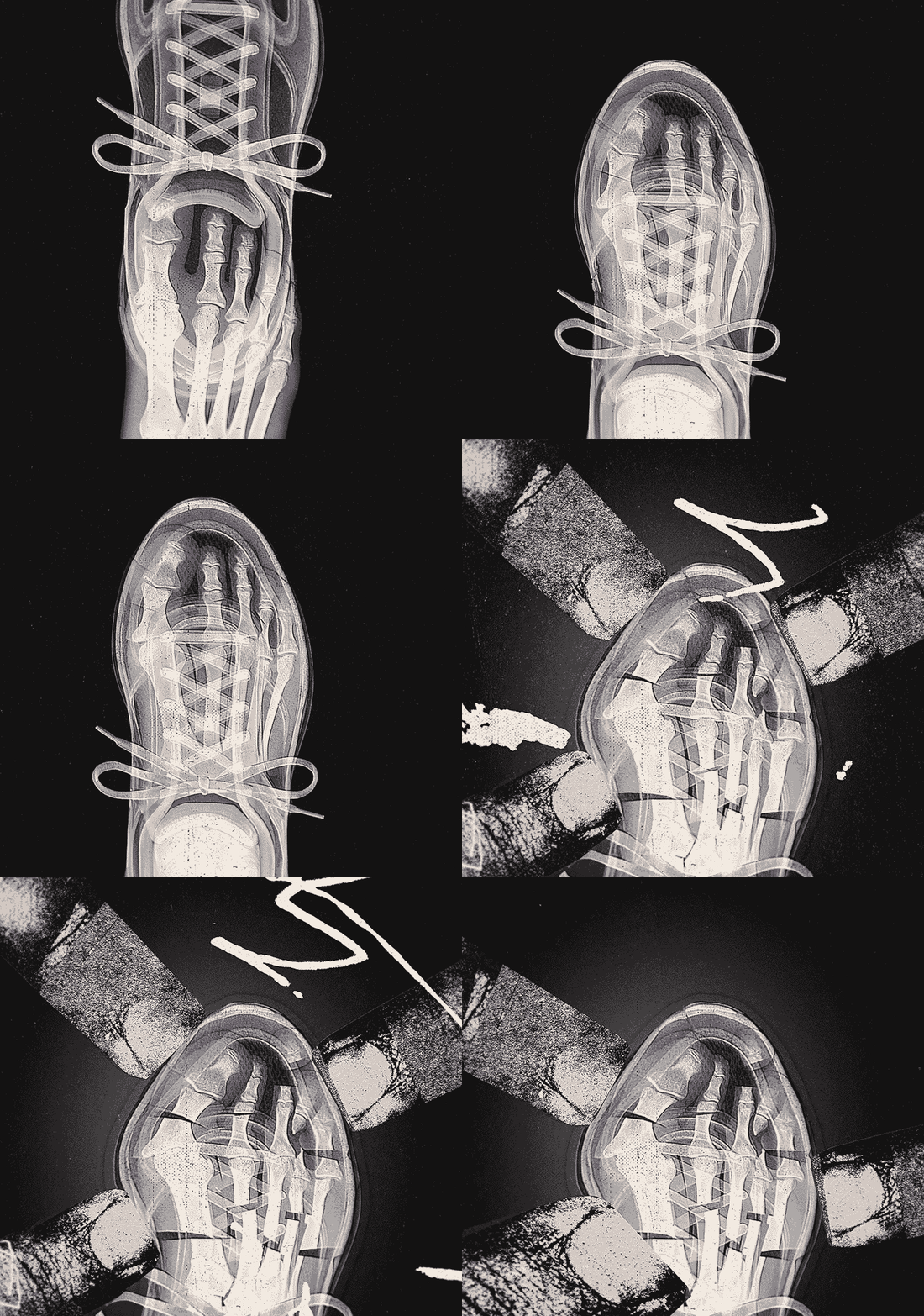
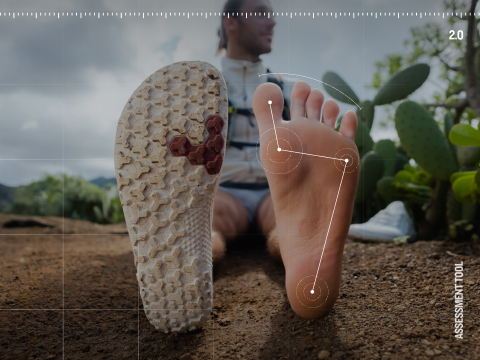
In the realm of footwear, the rise of “minimalist shoes”, also known as barefoot shoes, has sparked a revolution, shifting the focus from heavily cushioned soles and rigid structures to designs that prioritize natural foot movement. The barefoot shoes are crafted to mimic the sensation of walking barefoot while providing a good level of protection.
They allow your feet to move more naturally, promoting a more natural walking and foot function. This can help strengthen foot muscles naturally, ankles, and legs, thereby reducing certain risks of injuries related to weak or underutilized muscles..png)

Toebox Width
The toebox is wider in barefoot shoes compared to traditional shoes. This promotes natural toe splay, enhances balance, and prevents common foot issues.

Zero-drop Profile
Barefoot shoes maintain a flat profile, promoting a neutral foot position and reducing calf tension.

Flexibility
Made from lightweight and flexible materials, barefoot shoes allow for a more natural stride.
Transitioning to barefoot shoes should be gradual to allow your feet to adapt and avoid overuse injuries. For more specific use cases like training, you can also explore how shoes impact stability during workouts.

Go further:
|